

Cart
0
Category: Skincare Tips | Read time: 5 minutes
You cleanse your face, grab your toner, swipe it on, and move to the next step. Simple enough, right? But here's a question worth asking: do you actually know what your toner is doing or are you just using it because it's part of the routine?
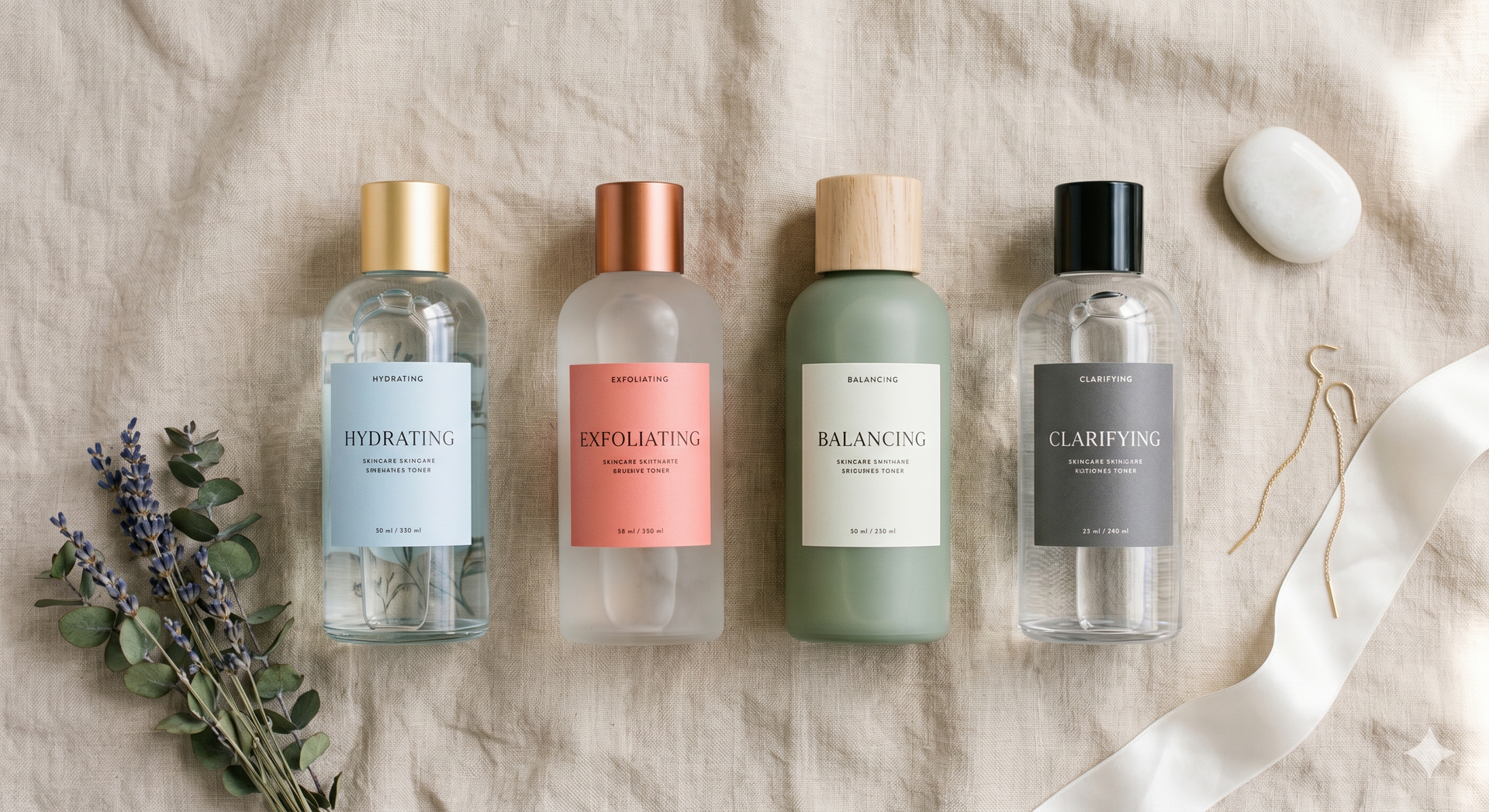
The truth is, not all toners serve the same purpose. There are hydrating toners, exfoliating toners, balancing toners, and clarifying toners and picking the wrong one for your skin concern isn't just a waste of money. It could be actively working against the results you're chasing.
Let's break it all down.
What Is a Toner, Really?
Toners are water-based liquids applied to the skin after cleansing and before serums or moisturisers. That's where the similarity ends. Beyond that, they can do completely different jobs depending on their formulation.
The old-school idea of a toner hat harsh, alcohol-heavy astringent your mum used to remove every last trace of oil is largely outdated. Modern toners are far more sophisticated. Some are designed to hydrate. Others exfoliate. Some reset your skin's pH. Others target acne, dark spots, or uneven texture.
The problem isn't toners. The problem is using one without knowing which category it falls into.
 The 4 Main Types of Toners (And Who They're For)
1. Hydrating Toners (Also Called Essences or Skin Boosters)
These are the most gentle and universally friendly toners on the market. Their job is to flood your skin with water-binding ingredients like hyaluronic acid, glycerin, and plant extracts essentially giving your skin a drink of water before you layer on your serum and moisturiser.
Best for: dry skin, dehydrated skin, sensitive skin, or anyone whose skin feels tight after cleansing.
Key ingredients to look for: Hyaluronic acid, aloe vera, glycerin, panthenol (Vitamin B5), snail mucin.
What happens if you skip this type: Your serum and moisturiser absorb into skin that's already thirsty, reducing their effectiveness. Hydrating toners prime the skin to absorb everything that comes next.
2. Exfoliating Toners (AHA/BHA Toners)
These toners contain chemical exfoliants typically AHAs (like glycolic or lactic acid) or BHAs (like salicylic acid) that dissolve dead skin cells, unclog pores, and improve skin texture over time. They're the workhorses of the toner world but require careful use.
Best for: oily or acne-prone skin, skin with clogged pores, uneven texture, hyperpigmentation, or dull skin that doesn't respond to hydrating products alone.
Key ingredients to look for: Salicylic acid (BHA goes into pores), glycolic or lactic acid (AHA — works on the surface), mandelic acid.
What happens if you use this incorrectly: Over-exfoliation is real. Using an exfoliating toner twice daily, or layering it with other actives like retinol or Vitamin C in the same routine, can cause redness, sensitivity, and a compromised skin barrier. Once or twice a week, or at night only, is a better starting point.
Important note: If you're using an exfoliating toner, always follow up with SPF in the morning. Your skin is more vulnerable to sun damage after exfoliation. Browse our Sunscreen collection for options that won't feel heavy on freshly treated skin.
3. Balancing / pH-Correcting Toners
After cleansing, your skin's natural pH (ideally between 4.5 and 5.5) can be disrupted, especially if you use a foaming or alkaline cleanser. A balancing toner helps restore this pH level quickly, so your subsequent products particularly exfoliants and actives can work at full strength.
Best for: anyone using actives like AHAs, BHAs, or Vitamin C serums, as these perform best on skin with a slightly acidic pH.
Key ingredients to look for: Mild acids, witch hazel (low concentration), fermented ingredients, niacinamide.
What happens if you skip this: Your actives may underperform. AHAs and BHAs, for example, need an acidic environment to exfoliate effectively. Using them on skin with an elevated pH means you're not getting full value from your Serums.
4. Clarifying / Acne-Control Toners
These toners are specifically formulated for acne-prone or oily skin. They typically contain antibacterial or sebum-regulating ingredients to reduce breakouts, control shine, and keep pores clear between washes. Some overlap with exfoliating toners (salicylic acid does double duty), but clarifying toners can also include ingredients like niacinamide, zinc, or tea tree extract.
Best for: oily skin, breakout-prone skin, skin with enlarged or congested pores.
Key ingredients to look for: Salicylic acid, niacinamide, zinc, tea tree, witch hazel.
What happens if dry or sensitive skin types use this: Disaster. Clarifying toners can be too stripping for skin that doesn't produce excess oil, leading to dryness, tightness, and ironically — more breakouts as the skin overcompensates by producing more sebum.

The Most Common Toner Mistakes (And How to Fix Them)
Mistake 1: Using an exfoliating toner every day. Fix: Limit AHA/BHA toners to 2–3 times a week, or at night only. Let your skin barrier recover between uses.
Mistake 2: Using a clarifying toner on dry or sensitive skin. Fix: If your skin is dry or sensitive, reach for a hydrating toner instead. Look for hyaluronic acid or ceramide-based formulas. Check our Moisturisers collection several of the hydrating creams there pair beautifully with a gentler toner routine.
Mistake 3: Applying toner with a cotton pad when you don't need to. Fix: Hydrating toners are more effective when patted in gently with clean hands you waste less product and the warmth of your palms helps absorption. Cotton pads are better suited to exfoliating or clarifying toners.
Mistake 4: Layering too many actives without thinking about order. Fix: Toner goes after cleanser and before serums. If your toner already contains an active (like salicylic acid), you don't always need to add another exfoliating serum on top in the same routine. Less is more with actives.
How to Choose the Right Toner for Your Skin
Here's a quick guide:
| Skin Concern | Toner Type to Reach For |
|---|---|
| Tight, dry, or dehydrated skin | Hydrating toner (HA, glycerin, aloe) |
| Oily, acne-prone, congested pores | Clarifying or BHA toner (salicylic acid) |
| Dull skin, uneven texture, dark spots | Exfoliating toner (AHA/BHA) |
| Using actives and want better absorption | pH-balancing toner |
| Sensitive or reactive skin | Gentle hydrating toner — no actives |

A toner is a step, not a solution in isolation. What you pair it with matters just as much. Here's what a balanced routine looks like regardless of which toner type you use:
- Cleanse — remove dirt, oil, and makeup without stripping → Shop Cleansers
- Tone — hydrate, balance, or treat depending on your skin's needs
- Serum — target specific concerns like pigmentation, brightness, or acne → Shop Serums
- Moisturise — seal in hydration and support your skin barrier → Shop Moisturisers
- SPF (AM only) — non-negotiable, especially if you're using any actives → Shop Sunscreen
Final Thoughts
A toner is not just a toner. It's a targeted step with real consequences depending on what's in it and whether it matches what your skin actually needs. Take five minutes to read the ingredient list on your current toner and match it to the categories above you might be surprised by what you've been applying to your face every day.
If you're unsure where to start, our team is always available to point you in the right direction. Drop us a message on Instagram @Diasbeauty or send us a WhatsApp we carry only 100% authentic, carefully curated products across our full skincare range, so whatever your skin type, there's a right option waiting for you.
Browse all skincare categories at diasbeautycosmetic.com


