

Cart
0
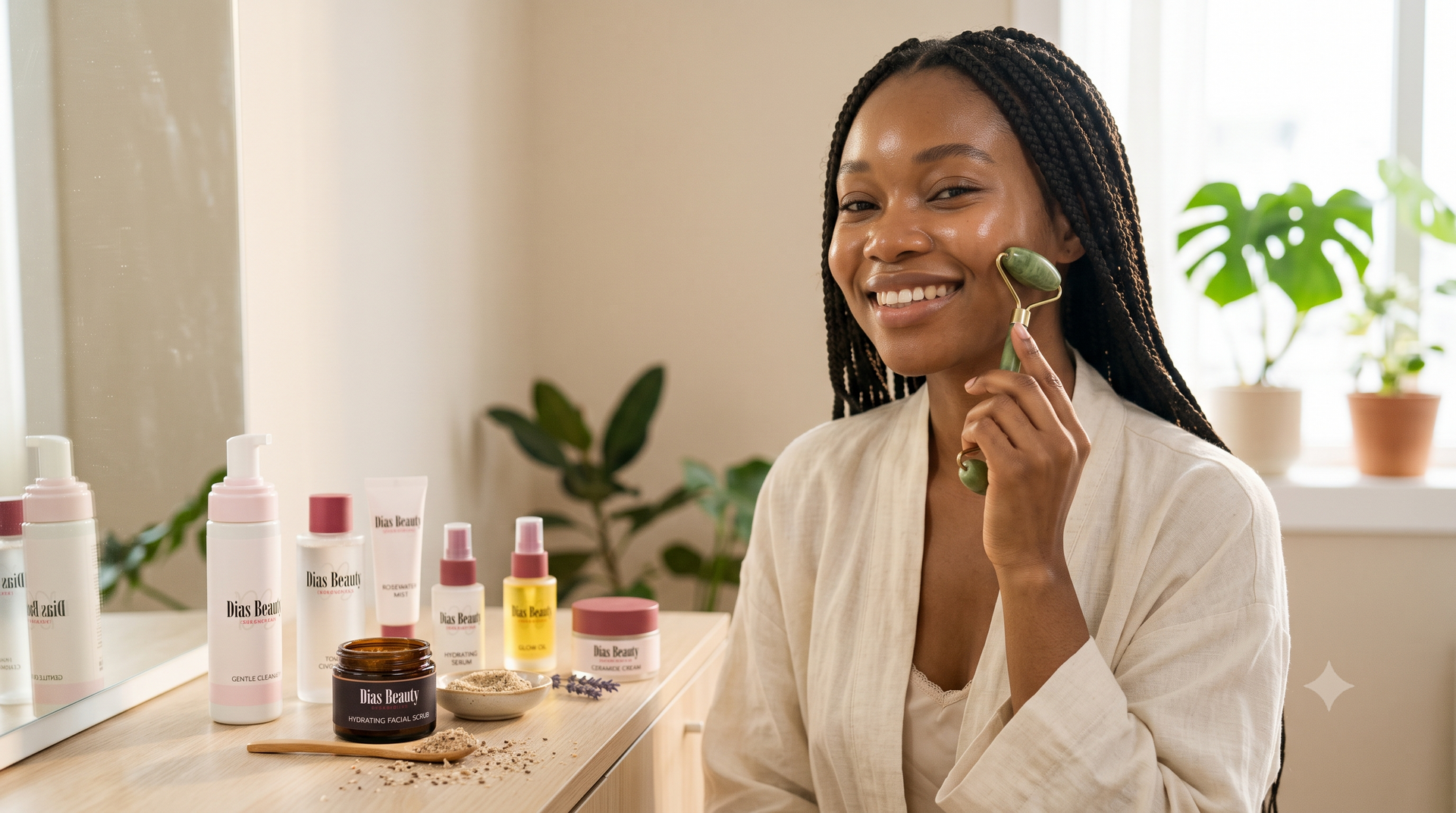
You've built your routine. You're cleansing, moisturising, and applying SPF every morning. Your skin is responding well it feels balanced, less reactive, more comfortable. And now you're ready to level up.
This is the point where most people make their biggest skincare mistake.
They find out about retinol, or glycolic acid, or a high-percentage Vitamin C, and they go all in full strength, every night, sometimes multiple actives at once. Within two weeks, their skin is red, peeling, purging, or more broken out than it was before they started.
This is not the active ingredient's fault. It's about introduction. Done correctly, skincare actives retinol, AHAs, BHAs, Vitamin C, niacinamide, tranexamic acid are some of the most transformative tools in skincare. Done incorrectly, they wreck the very thing that holds your routine together: your skin barrier.
This chapter is about doing it right.
What Is the Skin Barrier and Why Does It Matter?
Your skin barrier technically called the stratum corneum is the outermost layer of your skin. Think of it as a brick wall: skin cells are the bricks, and a mixture of lipids (ceramides, fatty acids, cholesterol) is the mortar that holds everything together.
A healthy skin barrier does two critical jobs:
- Keeps moisture in — preventing transepidermal water loss (TEWL), the invisible evaporation of water from your skin throughout the day
- Keeps irritants out — blocking pollution, bacteria, allergens, and harsh ingredients from penetrating the deeper layers of skin
When the barrier is intact, skin feels comfortable, looks plump, and responds well to products. When it's compromised through over-exfoliation, harsh ingredients, sun damage, or simply introducing too many actives too quickly skin becomes reactive, tight, dry, and inflamed.
A damaged skin barrier is also less able to absorb and benefit from the very actives you're trying to use. So the irony is this: rushing actives breaks down the system they need to work through.
 The Golden Rules for Introducing Actives
Before we go ingredient by ingredient, here are the principles that apply to every active you'll ever introduce:
Rule 1: One new active at a time. Never introduce two new actives in the same week. If your skin reacts, you won't know which ingredient caused it. Introduce one, wait 2–4 weeks, assess, then add the next.
Rule 2: Start low, go slow. Always begin with the lowest available concentration and the least frequent use. Retinol? Start with 0.025% or 0.05%, twice a week. AHAs? Once a week before moving to twice. Your skin builds tolerance give it the chance to do so.
Rule 3: Patch test every new product. Apply a small amount to your inner arm or behind your ear for 3–5 days before applying to your face. Non-negotiable, especially for active-rich formulas.
Rule 4: Don't layer conflicting actives on the same night. Retinol and AHAs on the same night is too much. Vitamin C and BHA in the same routine is counterproductive. We'll cover exact combinations below.
Rule 5: Moisturiser is not optional when using actives. Actives increase cell turnover and can temporarily compromise the barrier. A good moisturiser with ceramides, hyaluronic acid, or squalane is what keeps your barrier intact while the actives do their work.
The Key Actives — What They Do and How to Introduce Them
Retinol (Vitamin A)
What it does: Speeds up cell turnover, stimulates collagen production, fades dark spots, smooths fine lines, and unclogs pores. One of the most comprehensively studied and proven anti-ageing ingredients in existence.
Who it's for: Anyone dealing with signs of ageing, acne scarring, uneven texture, dull skin, or persistent hyperpigmentation. Not recommended during pregnancy.
How to introduce it:
- Start with the lowest concentration available (0.025%–0.05%)
- Use once a week at night only, for the first 2–3 weeks
- Gradually increase to twice a week, then every other night over 2–3 months
- Always follow with moisturiser never apply retinol to completely dry skin if you have sensitive skin; apply moisturiser first, then retinol (the "sandwich method")
- Always wear SPF the following morning retinol increases sun sensitivity significantly
What to expect: Mild flaking, dryness, or sensitivity in the first few weeks is normal. This is your skin adjusting called retinisation. It passes. Severe redness or burning is a sign you're using too much too fast.
AHAs — Glycolic Acid & Lactic Acid
What they do: Chemical exfoliants that dissolve the bonds between dead skin cells on the surface, revealing brighter, smoother, more even-toned skin underneath. Glycolic acid is smaller and penetrates deeper (more effective, slightly more irritating). Lactic acid is gentler and also hydrating better for beginners and darker skin tones.
Who it's for: Dull skin, uneven texture, rough patches, surface-level hyperpigmentation, dry or dehydrated skin (lactic acid specifically).
How to introduce it:
- Start with a low-concentration formula (5–8% AHA) once a week at night
- Increase to twice a week after 3 – 4 weeks if your skin is tolerating it well
- Never exceed 3 times a week
- Do not use on the same night as retinol
- Always follow with SPF the next morning AHAs significantly increase photosensitivity
Skin tone note: On melanin-rich skin, over-exfoliation is a direct trigger for post-inflammatory hyperpigmentation. Less is genuinely more. If your skin feels tight or looks red after using an AHA, scale back immediately.
BHAs — Salicylic Acid
What it does: An oil-soluble exfoliant that penetrates into the pore lining to dissolve excess sebum, dead skin cells, and congestion from the inside. Anti-inflammatory and antibacterial the gold standard for acne-prone and oily skin.
Who it's for: Oily skin, acne-prone skin, blackheads, whiteheads, enlarged pores, congested skin.
How to introduce it:
- Start with a 0.5%–1% concentration, 2 – 3 times a week
- Can be used as a toner or serum, at night
- Does not conflict with niacinamide these two work well together for oily and acne-prone skin
- Avoid layering with AHAs on the same night in the beginning
Vitamin C (L-Ascorbic Acid)
What it does: Brightens skin tone, inhibits melanin production, neutralises free radicals from UV and pollution exposure, and supports collagen synthesis. A morning-routine powerhouse.
Who it's for: Anyone dealing with dullness, hyperpigmentation, uneven skin tone, or signs of premature ageing. Works for virtually all skin types.
How to introduce it:
- Start with a stable, lower-percentage formula (10%) if your skin is sensitive
- Apply in the morning after toner, before moisturiser and SPF
- Allow it to absorb fully (60 seconds) before applying SPF
- Store away from direct sunlight Vitamin C oxidises when exposed to light and heat, which turns it orange and reduces its effectiveness
Layering note: Vitamin C in the morning, AHAs and retinol at night. Never mix all three in the same routine.
Niacinamide (Vitamin B3)
What it does: Regulates sebum, reduces inflammation, blocks melanin transfer, strengthens the skin barrier, minimises the appearance of pores, and improves skin texture over time. One of the most gentle and universally compatible actives available.
Who it's for: Everyone. Seriously. Niacinamide is the one active that suits virtually all skin types and concerns.
How to introduce it:
- Niacinamide is one of the easiest actives to introduce start with 5–10% and use daily
- Works morning or evening
- Compatible with most other actives pairs beautifully with hyaluronic acid, SPF, retinol (PM), and Vitamin C (though apply niacinamide first if layering with Vitamin C)

The Active Layering Guide: What Goes With What
This is the chart every skincare beginner needs:
| Active | AM or PM? | Compatible With | Avoid Layering With |
|---|---|---|---|
| Vitamin C | AM | Niacinamide, SPF, hyaluronic acid | AHAs, BHAs (same routine) |
| Niacinamide | AM or PM | Almost everything | Nothing significant |
| Retinol | PM only | Moisturiser, hyaluronic acid | AHAs, BHAs (same night) |
| AHAs (Glycolic/Lactic) | PM only (2–3x/week) | Niacinamide (after), moisturiser | Retinol, Vitamin C (same routine) |
| BHAs (Salicylic Acid) | PM (2–3x/week) | Niacinamide, moisturiser | Retinol, AHAs (same night, when starting out) |
| Tranexamic Acid | AM or PM | Niacinamide, SPF, hyaluronic acid | No major conflicts |
How to Know If You've Overdone It
Your skin will tell you when you've pushed too far. Signs of a compromised barrier from over-activing include:
- Persistent redness or stinging that doesn't settle within an hour of applying products
- Skin that feels tight and dry even right after moisturising
- New breakouts appearing in areas that weren't previously affected
- Increased sensitivity to products that were previously fine
- Peeling that goes beyond the mild flaking expected with retinol
If this happens: Stop all actives immediately. Go back to basics — a gentle cleanser, a barrier-repairing moisturiser with ceramides, and SPF only. Give your skin 1–2 weeks to recover before reintroducing anything, and when you do, start slower than before.
→ Shop Barrier-Repairing Moisturisers | Shop Gentle Cleansers

The Beginner's Active Introduction Timeline
Here's a practical 12-week plan for safely adding actives to an established routine:
Weeks 1–2: Introduce niacinamide serum (daily, AM or PM) — easiest starting point for any skin type.
Weeks 3–4: Add Vitamin C serum in the morning. Assess how your skin responds before moving forward.
Weeks 5–6: Introduce an AHA or BHA once a week at night (choose based on your concern — texture/pigmentation = AHA; acne/oiliness = BHA). Do not use on the same night as Vitamin C.
Weeks 7–8: Increase AHA or BHA to twice a week if skin is tolerating it comfortably.
Weeks 9–12: If your skin is stable and your concern includes ageing or deep pigmentation, introduce retinol once a week at night. Keep AHAs/BHAs on separate nights.
This is a conservative timeline and that's intentional. Skin that adjusts gradually performs better over the long term than skin that's been shock-treated with multiple actives at once.
Support Your Skin from the Inside Too
Actives work at the surface and just below it. But skin health also depends on what's happening internally — collagen production, inflammation levels, hydration. Our Supplements collection includes Vitamin C, collagen, and skin-supporting formulas that complement everything you're doing topically and work at a cellular level no serum can reach.
The Bottom Line
Skincare actives are not the enemy. Used correctly, they are the most powerful tools available for transforming your skin fading pigmentation, smoothing texture, reversing early signs of ageing, and clearing acne with consistency. The mistake isn't in using them. The mistake is in rushing them.
One at a time. Low concentration first. Build up slowly. Protect with SPF. Keep the barrier intact with a good moisturiser throughout.
That's the formula. It works for every skin type, every skin tone, and every concern because it's built on how skin actually functions, not on what's trending.
Browse our full Serums collection for every active mentioned in this guide all 100% authentic, sourced directly from certified distributors. Not sure which to start with? Message us on Instagram @Diasbeauty_cosmetics or WhatsApp we'll help you build the right active introduction plan for your specific skin.


