

Cart
0
Read time: 6 minutes
If you read our last post on why dark spots keep coming back, you already know the two non-negotiables: treating the trigger and wearing SPF every single day. But there's a third piece of the puzzle that trips up almost everyone using the right brightening ingredients in the right order.
Because here's the truth: not all hyperpigmentation ingredients work the same way. Some block melanin production at the source. Others speed up how quickly pigmented cells are shed from the surface. Some do both. And layering them incorrectly or using them at the wrong time of day can mean you're cancelling out their benefits without even knowing it.
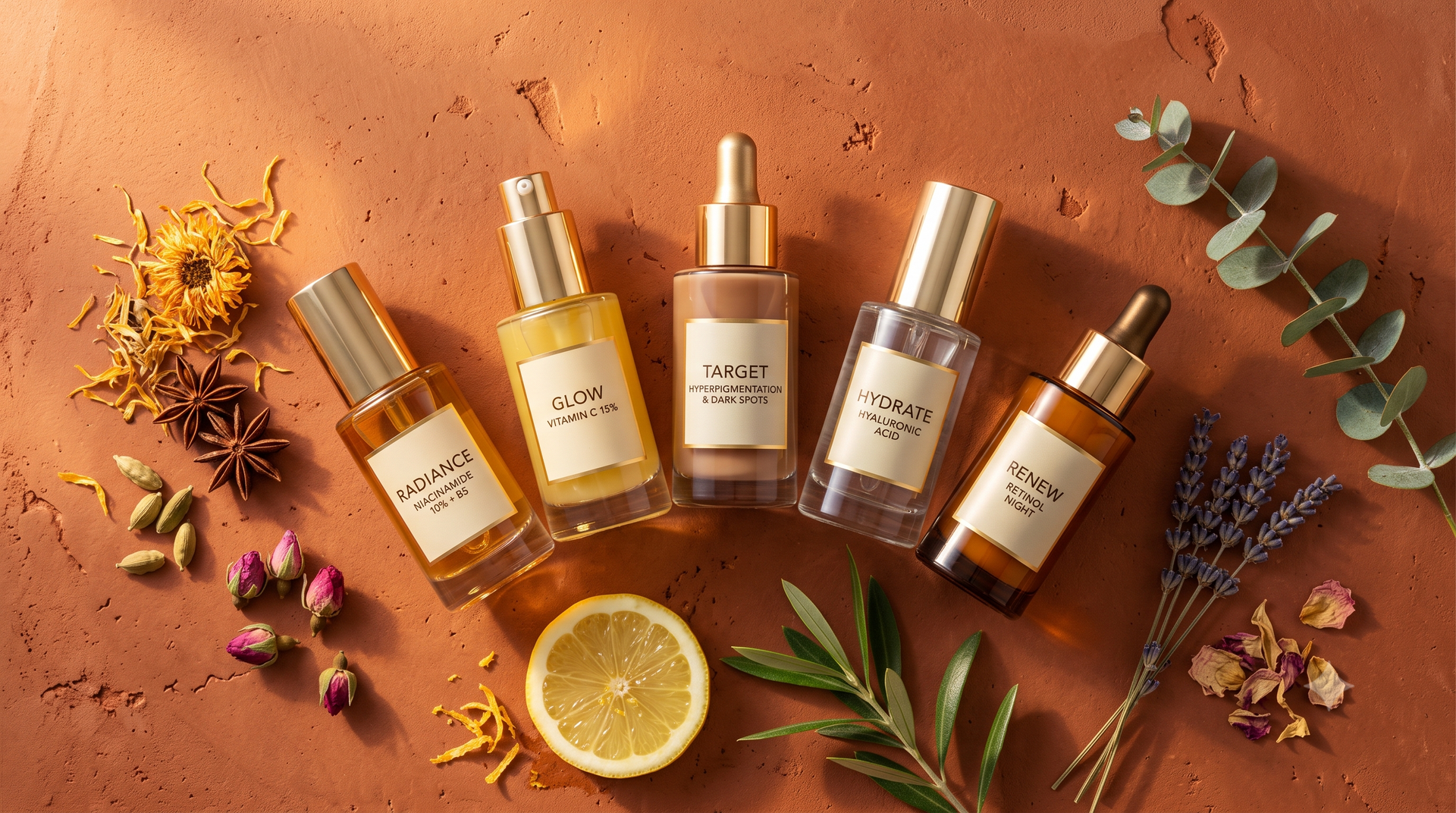
This guide breaks down the most effective, science-backed ingredients for fading dark spots on melanin-rich skin, what each one actually does, and exactly how to layer them for maximum results.
Why Melanin-Rich Skin Needs a Different Approach
Dark skin tones are naturally more prone to post-inflammatory hyperpigmentation (PIH) the dark marks left behind after acne, inflammation, or even minor skin trauma. This happens because melanin-rich skin has more active melanocytes (pigment-producing cells) that are quicker to respond to any kind of irritation or injury.
This means two things:
- Harsh, aggressive treatments often make things worse. Ingredients like high-concentration glycolic acid peels or prescription-strength hydroquinone used incorrectly can trigger more inflammation and therefore more pigmentation on darker skin tones.
- Gentle, consistent, multi-pathway treatments work better. The goal is to inhibit melanin production, speed up cell turnover, and protect the skin barrier all at once without causing the irritation that creates new dark spots.
The good news? The ingredients that do this best are widely available, effective, and far safer than old-school bleaching agents.

The Best Hyperpigmentation Ingredients for Dark Skin Tones
1. Niacinamide (Vitamin B3)
What it does: Blocks the transfer of melanin from pigment-producing cells to the surface of the skin. Reduces inflammation, strengthens the skin barrier, and regulates sebum. One of the most researched and well-tolerated brightening ingredients available.
Why it's ideal for darker skin: It's anti-inflammatory by nature which means it treats pigmentation without triggering new inflammation. It also works well for acne-prone skin, which is one of the biggest sources of PIH.
Concentration to look for: 5–10% is the sweet spot. Below 5% shows minimal results; above 10% can cause temporary flushing in some skin types.
Best time to use: Morning or evening niacinamide is stable and works any time of day.
2. Tranexamic Acid (TXA)
What it does: Interrupts the signal between UV-damaged skin cells and melanocytes, blocking the instruction to produce excess melanin. Particularly effective for melasma and hormonal pigmentation that doesn't respond well to other actives.
Why it's ideal for darker skin: Clinical studies show tranexamic acid is highly effective on PIH and melasma in deeper skin tones the types of hyperpigmentation most common in Black and brown skin. It's also exceptionally gentle, making it suitable even for sensitive or reactive skin.
Concentration to look for: 2–5% in topical formulations.
Best time to use: Evening preferred, but safe for AM use too.
The Anua Niacinamide 10% + TXA 4% Dark Spot Correcting Serum from our Serums collection combines both of these powerhouse ingredients in one formula making it one of the smartest single-product options for treating PIH on darker skin tones.
3. Vitamin C (L-Ascorbic Acid / Stable Derivatives)
What it does: A potent antioxidant that inhibits the enzyme (tyrosinase) responsible for triggering melanin production. Simultaneously brightens existing pigmentation and protects skin from UV-induced melanin stimulation.
Why it's ideal for darker skin: Vitamin C is one of the few brightening ingredients that works preventatively and correctively at the same time. It neutralizes free radicals from sun exposure one of the biggest external triggers of dark spots.
Concentration to look for: 10–20% L-Ascorbic Acid for maximum potency, or stable derivatives like Ascorbyl Glucoside or THD Ascorbate for those with sensitive skin.
Best time to use: Morning this is important. Vitamin C amplifies SPF protection and fights UV-triggered pigmentation in real time. Pairing it with sunscreen in your morning routine gives you the strongest defense against new dark spots forming.
4. Alpha Arbutin
What it does: A gentler, stabilized form of hydroquinone (without the side effects) that slowly inhibits tyrosinase to reduce melanin production over time. Safe and effective for long-term use.
Why it's ideal for darker skin: Alpha arbutin works gradually without irritation, making it a reliable ingredient for consistent, daily use which is exactly what deep or stubborn pigmentation requires.
Concentration to look for: 1–2% in serums. Higher isn't always better with alpha arbutin stability matters more than concentration.
Best time to use: Evening.
5. AHAs — Glycolic Acid & Lactic Acid
What they do: Chemical exfoliants that dissolve the bonds between dead skin cells, accelerating the shedding of pigmented surface cells and allowing brightening serums to penetrate more effectively.
Why it's ideal for darker skin: Lactic acid is the gentler of the two and better suited for melanin-rich skin. Glycolic acid works faster but can cause irritation if overused. Both help reveal fresher, clearer skin underneath but must be used carefully and always followed by SPF.
Best time to use: Evening only, 2–3 times a week maximum. Never use on the same night as retinol.
6. Kojic Acid
What it does: A naturally derived ingredient (from fermented fungi) that inhibits tyrosinase and lightens existing pigmentation. Often combined with other brightening ingredients for a synergistic effect.
Why it's ideal for darker skin: Works particularly well on sun spots, acne scars, and stubborn PIH. The Topicals Faded Serum formulated specifically for melanin-rich skin combines Kojic Acid with Tranexamic Acid and other brightening actives in a formula designed to work on multiple pathways simultaneously.
Best time to use: Evening.

How to Layer These Ingredients Correctly
This is where most people go wrong. The right ingredients used in the wrong order, or at the wrong time, can reduce their effectiveness or cause irritation. Here is the correct layering sequence:
Morning Routine (Protect + Prevent)
Step 1 — Cleanse Start with a gentle, pH-balanced cleanser that won't disrupt your skin barrier. Harsh cleansers cause micro-inflammation which triggers more pigmentation in melanin-rich skin. → Shop Cleansers
Step 2 — Niacinamide Serum Apply your niacinamide serum first. It preps the skin, reduces inflammation, and blocks melanin transfer before the rest of your routine goes on. → Shop Serums
Step 3 — Vitamin C Serum Layer Vitamin C over niacinamide after it absorbs. This is your antioxidant shield — it fights UV-triggered melanin stimulation in real time throughout the day.
Step 4 — Moisturiser Lock everything in and support your skin barrier. A healthy, intact barrier absorbs actives better and is less reactive to triggers. → Shop Moisturisers
Step 5 — SPF (Non-Negotiable) Every morning. Every day. Without SPF, your Vitamin C, niacinamide, and tranexamic acid are fighting a losing battle. UV exposure is the number one reason dark spots return. → Shop Sunscreen
Evening Routine (Treat + Repair)
Step 1 — Cleanse Remove SPF, makeup, pollution, and excess oil thoroughly.
Step 2 — Exfoliate (2–3x per week only) On exfoliation nights, apply your AHA (lactic or glycolic acid) toner or serum after cleansing. Skip all other actives on these nights — let the exfoliant work alone.
Step 3 — Brightening Treatment Serum (non-exfoliation nights) Apply your main dark spot treatment: Tranexamic Acid, Alpha Arbutin, Kojic Acid, or a combination formula like the Topicals Faded Serum or Anua Niacinamide + TXA. These work best overnight when skin is in repair mode.
Step 4 — Moisturiser Seal and repair. Look for formulas with ceramides or hyaluronic acid to support barrier recovery overnight.

The Ingredient Combinations to Avoid
Even the best ingredients can work against each other if paired incorrectly:
- Vitamin C + AHAs in the same step — both are acidic and can cause irritation when used together. Keep Vitamin C for AM, AHAs for PM.
- Retinol + AHAs on the same night — over-exfoliation and barrier damage. Alternate nights instead.
- Multiple high-percentage actives at once — more is not more. Niacinamide + TXA + Kojic Acid in one product (like a well-formulated serum) is fine. Layering five separate strong actives is not.
The Bottom Line
Fading hyperpigmentation on dark skin tones isn't about finding one miracle ingredient. It's about understanding how different ingredients work, using them at the right time of day, and layering them in the right order so they enhance — not cancel — each other.
Start with niacinamide and SPF as your foundation. Add Vitamin C in the morning. Use your targeted treatment (TXA, Alpha Arbutin, Kojic Acid) at night. Exfoliate gently, 2–3 times a week. Stay consistent for at least 8–12 weeks.
That's the formula. Not a secret. Not complicated. Just consistent.
Browse our full Serums collection for all the brightening actives mentioned in this guide — 100% authentic, sourced directly from certified brands. Or message us on Instagram @Diasbeauty and we'll help you build the right routine for your specific skin concerns.
Browse all skincare categories at diasbeautycosmetic.com


